
· Travel · 7 min read
What Electrical Outlets Are in Morocco? A Complete Plug & Power Guide
Wondering what electrical outlets are in Morocco? Complete guide covering Morocco plug types (Type C and E), voltage, device compatibility, and tips for charging in riads, desert camps, and on the road.
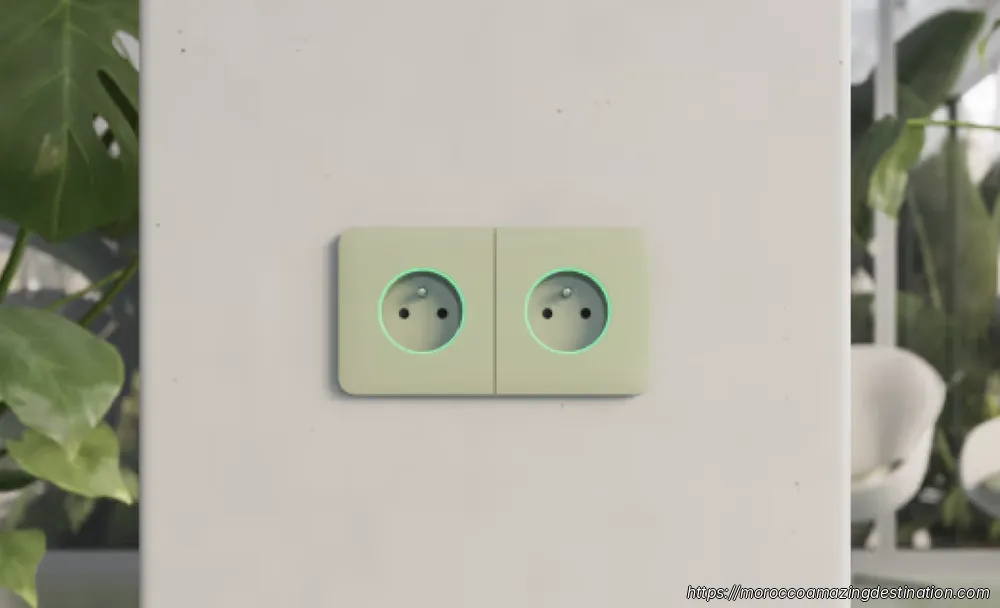
If you are planning a trip to North Africa, understanding what electrical outlets are in Morocco is one of the most practical things you can research before you go. Arriving at your riad in Marrakech with a dead phone and no way to charge it is every traveler’s nightmare — and it happens more often than you would think.
Morocco follows the European electrical standard, which is good news for many visitors. But there are important nuances that go beyond just knowing the plug type. From charging your devices in a traditional riad with limited outlets to keeping your phone alive during a Sahara Desert camp, this guide covers everything you need to know about electricity in Morocco.
Morocco’s Electrical System at a Glance
Before you pack your bags, here are the key electrical specifications for Morocco:
- Voltage: 220 volts
- Frequency: 50 Hz
- Outlet types: Type C and Type E
Both outlet types are standard across the country, from modern hotels in Casablanca to guesthouses in the Atlas Mountains. You will encounter them everywhere, so understanding the difference is important.
Type C Outlets (The Europlug)
Type C is the classic European two-pin plug. It features two round pins without any grounding connection. This is the most common outlet type in older buildings and traditional riads. The Type C design is simple, safe, and compatible with most European devices that use thin round pins.
If your device charger has two thin round pins, it will fit directly into a Moroccan Type C socket. Many phone chargers, laptop adapters, and small electronics use this plug type.
Type E Outlets (French Standard)
Type E outlets look similar to Type C but include a round male grounding pin that protrudes from the wall socket. This pin connects with a corresponding hole in the plug, providing a grounded connection for larger appliances.
The good news is that Type C plugs fit perfectly into Type E sockets. Morocco uses both types interchangeably, though newer constructions tend to favor Type E. A standard European travel adapter that supports both types will cover every situation you encounter.
Will Your Plugs Work in Morocco?
The answer depends entirely on where you are traveling from. Here is a breakdown by country.
Traveling from Italy
Italian travelers need to pay attention. Italy primarily uses Type L plugs, which have three pins arranged in a row. The standard Type L plug will not fit into Moroccan Type C or E sockets because the pin spacing differs.
However, many Italian electronic devices — especially phone chargers and small appliances — use the thinner two-pin Europlug design, which is fully compatible with Moroccan outlets. Check your charger before you leave: if it has two thin round pins, you are good to go.
For devices with the three-pin Type L plug, you need a simple and inexpensive Type C/E travel adapter. You can find these at any electronics store in Italy or order one online before your trip. A universal adapter is a smart investment if you travel frequently.
Traveling from Spain and Europe
Good news for Spanish travelers and most Europeans. Spain uses Type F (Schuko) plugs with two round pins and side grounding clips. These plugs fit into Moroccan Type E sockets without any adapter. Type C Europlugs also work directly.
If you are coming from Spain, France, Germany, Portugal, Belgium, or the Netherlands, your plugs will work in Morocco with zero modifications.
Traveling from the United Kingdom
UK travelers use Type G plugs with three rectangular pins arranged in a triangle. These are not compatible with Moroccan sockets. You need a Type C/E travel adapter for every device you plan to plug in. Consider an adapter with multiple USB ports to charge several devices at once.
Traveling from the United States and Canada
North American travelers use Type A and Type B plugs with flat parallel pins. These will not fit Moroccan round-pin sockets under any circumstances. You need a Type C/E adapter for all your devices. A universal adapter with surge protection is highly recommended.
Charging Your Devices Across Morocco
Knowing the plug type is only half the story. Where and how you charge your devices matters just as much, especially once you leave the major cities.
In Riads and Traditional Accommodations
Traditional Moroccan riads are beautiful, but their electrical systems can be basic. Most riads have been renovated to include modern wiring, but outlets are often limited — expect one or two sockets per room, sometimes in inconvenient locations.
Practical tips for riad charging:
- Bring a multi-port USB charger so you can charge your phone, power bank, and camera battery from a single outlet
- Pack a short extension cord if you have multiple devices — these take almost no luggage space
- Some riads place outlets near the floor or behind furniture, so a charger with a long cable is helpful
- Wi-Fi routers in riads sometimes occupy the only accessible outlet; ask staff if you need an extra socket
In Desert Camps
This is the most important section for anyone planning a Sahara Desert experience. Desert camps in Merzouga and Zagora usually provide electricity, but with significant limitations.
What to expect in desert camps:
- Solar power is the primary energy source, stored in batteries during the day
- Generators supplement solar power, typically running for a few hours in the evening
- Charging is usually available in the common dining tent, not in individual sleeping tents
- Power may be switched off after dinner to conserve energy
Bring a high-capacity power bank — at least 20,000 mAh. This will charge your phone three to four times and is essential for overnight stays in the dunes. If you are a photographer with camera batteries to charge, consider two power banks or a larger 30,000 mAh model.
In Cafes and Restaurants
Modern cafes in Marrakech, Fes, and Casablanca often have outlets available for customers. This is especially true in international chains and co-working spaces. However, do not rely on this in smaller towns and rural areas, where cafes rarely offer charging facilities.
When you find a charging-friendly cafe, it is polite to order something before plugging in, especially if you plan to stay for a while.
On the Road
If you are taking a road trip or private tour, a car charger that plugs into the 12V cigarette lighter socket is invaluable. Most Moroccan tour vehicles have these sockets, though USB ports built into the vehicle are less common.
For multi-day tours through the Atlas Mountains and desert, a car charger combined with a power bank gives you the flexibility to charge whenever the vehicle is moving.
Essential Power Accessories for Your Morocco Trip
Here is a checklist of electrical accessories worth packing:
- Universal travel adapter (Type C/E) — The number one essential item if your plugs are not European
- High-capacity power bank — 20,000 mAh minimum for desert trips
- Multi-port USB charger — Charge multiple devices from one outlet in riads
- Short extension cord — Solves the limited-outlet problem in traditional accommodations
- Car charger — Essential for road trips and private tours
- Surge protector — Protects sensitive electronics from voltage fluctuations, which can occur in rural areas
Voltage and Device Compatibility
Morocco operates on 220V at 50Hz, matching the European standard. Most modern electronics handle this without issue.
Check the small text on your charger or power adapter. If it reads “Input: 100-240V ~ 50/60Hz” your device is dual voltage and only needs a plug adapter. This applies to:
- Smartphones and tablets
- Laptop chargers
- Camera battery chargers
- USB power banks
- Electric toothbrushes and razors
Devices that may need a voltage converter:
- Hair dryers (unless marked dual voltage)
- Hair straighteners and curling irons
- Electric shavers (older models)
- Electric kettles and travel irons
These heating appliances often operate exclusively at 110V or 230V. Plugging a 110V device into a 220V Moroccan socket without a converter will damage it permanently. Always check the label before plugging anything in.
Plan Your Morocco Adventure
Now that you know exactly what electrical outlets are in Morocco and how to keep your devices powered, you are ready to explore everything this incredible country has to offer.
For an unforgettable journey into the Sahara, book our 3-Day Trip from Marrakech to Merzouga. This tour takes you across the High Atlas Mountains, through the UNESCO-listed Ait Benhaddou Kasbah, and into the golden dunes of Erg Chebbi for a camel trek and overnight stay in a Berber desert camp.
If you prefer a more relaxed pace, our 4-Day Morocco Desert Tour from Marrakech gives you extra time to explore the Dades Valley, Todra Gorge, and the Sahara at a comfortable rhythm — with full evenings to enjoy the desert sky after your devices are safely charging.
Frequently Asked Questions
What type of electrical outlets are used in Morocco?
Morocco uses Type C and Type E outlets with two round pins, operating at 220V voltage and 50Hz frequency. Type E outlets have an additional male grounding pin that protrudes from the socket, while Type C is the classic two-pin Europlug found across Europe.
Do Italian plugs work in Morocco?
Italian Type L plugs (three pins in a row) do not fit Moroccan Type C and E sockets. However, many Italian devices use the thinner two-pin Europlug (Type C) which works perfectly. For Type L plugs, you need a simple Type C/E travel adapter.
Can I charge my phone in a desert camp?
Most desert camps in Merzouga and Zagora provide limited electricity through solar panels and generators. Charging is usually available in common areas for a few hours in the evening. Bring a high-capacity power bank (20,000 mAh or more) to ensure your devices stay charged overnight in your tent.
Are power outages common in Morocco?
Power outages are rare in major cities like Marrakech, Casablanca, and Fes. However, they can occur in remote rural areas, mountain villages, and desert regions, especially during summer when demand peaks. A power bank is recommended if you are traveling outside urban centers.